
Muscanell Millworks manufactures exclusively solid hardwood flooring, but we know there are many questions about engineered.
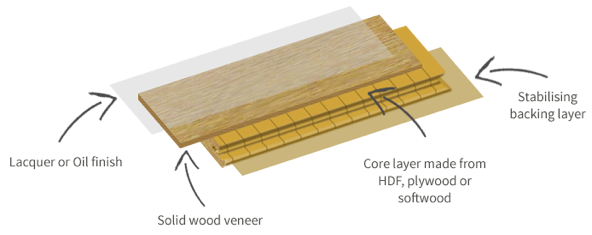
The idea of engineered flooring is to add stability to a floor by applying a 0.6-6mm wear layer/veneer of the desired species on top of a cheaper wood core material that counteracts the movement. This is done by having the core material fibers run 90% offset to the wear layer material.
Compared to solid hardwood flooring, like that produced by Muscanell, engineered flooring has different production, core, and pressing components that all play a role in flooring’s stability and overall performance.
Wear Layer Process
1. Sawn Face
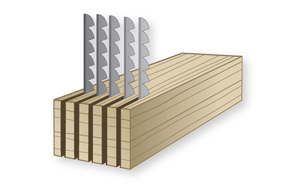
The log drying process as previously described usually to 7-9%. Afterwards the logs get sawn along the board into the desired thickness (4-6mm). This method puts the least amount of stress on wood fiber; it is the most stable but also the slowest and used for thicker wear layers.
2. Sliced Face
No drying of the lumber, lumber gets debarked and then into soaking.
Before the material is cut into thin slices of wood, the logs go through a soaking or softening process to prepare them for cutting. This involves immersing logs in water or exposing them to steam at temperatures ranging from 80 °C to 100 °C for between 12 and 72 hours. Soaking helps to soften the fibers within the wood.
3. Rotary Peel
No drying of the lumber and same soaking process as sliced face
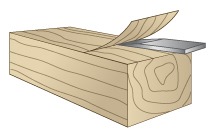
In this method, a log is mounted on a lathe and rotated against a sharp blade, veneer peeling off layers in one continuous roll. This technique produces wide sheets with varied grain patterns on the veneer face. This method is used to create the thinnest veneers.

Since sliced and rotary peels use wet lumber and introduce additional water/steam to the wood, it can a lot of stress within the wood fibers, and the thin layers of veneer need to be dried afterwards. These floors can be very sensitive to face checking if there is a lack of moisture in the environment.
Sometimes, the wear layer is so thin that it can’t handle any movement- the fibers will split and crack open.
Core Material:
A variety of cheaper core materials are used in engineered flooring, such as HDF, plywood, softwoods such as birch, eucalyptus and others.
Assembly
The face / veneer and the core material (varies from 3-10 layers) are stacked and glued on top of each other, either using a hot press or cold press method
Hot Pressing: Panels are placed in a hydraulic press where heat and high pressure cure the adhesive, creating a strong, permanent bond quickly.
Cold Pressing: Panels are pressed at room temperature. This method typically requires longer pressure times to achieve full adhesion
Afterwards the material gets sized, tongue and groove applied and sent through the finishing process.
Finish can vary from oil, stain and finish depending on the desired look, durability and manufacturer.
There are certainly applications where engineered flooring is appropriate, but it must be put in the right environments from the get go, then consistently maintained moving forward. It's a good idea to be educated on all these additional components and factors prior to installation.